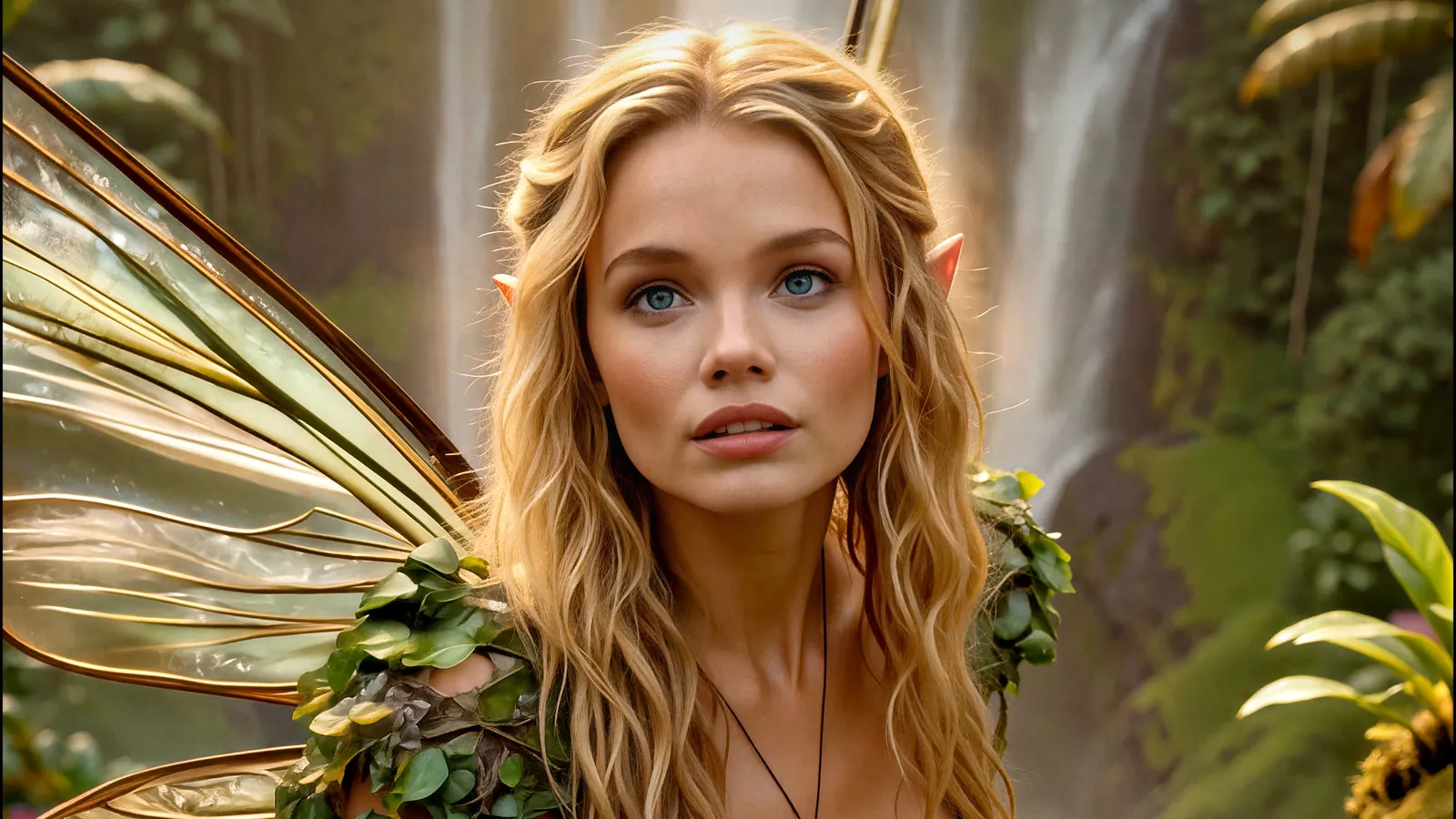
Epic fantasy romance is what happens when a love story is asked to carry the weight of a world. Kingdoms are falling, ancient powers are waking, and somewhere in the middle of it two people who should never have met — a mortal and an immortal, a soldier and a princess, a castaway and a fae — choose each other anyway. The war doesn't pause for them. The romance has to survive inside it.
The genre is older than the word "romantasy" and broader than any one bestseller list. It runs from Tolkien's Beren and Lúthien to The Princess Bride, from Juliet Marillier's folklore retellings to today's fae court sagas. What unites it is scale: the stakes of the romance and the stakes of the world are the same stakes.
Table of Contents
Epic Fantasy Romance is fantasy fiction in which a central love story unfolds against world-scale stakes — wars, curses, ancient bargains, or the fate of a realm. Unlike epic fantasy where romance is a subplot, the relationship drives the story; unlike romance-first fantasy, the world is large enough that the lovers' choices change it.

Fae guardians, airships, and a duel over a forbidden love — from Airovale by Jef Gray
Origins and Evolution
Myth, Ballad, and Chivalric Romance
The oldest epic love stories were already fantasy. Greek myth gave us Orpheus descending into the underworld for Eurydice, and Eros and Psyche bound by a divine prohibition. Celtic tradition gave us Tristan and Isolde and the ballad of Tam Lin, in which Janet wins her lover back from the Queen of Fairies by holding on through every monstrous shape the fae force upon him. Medieval chivalric romance joined quests, enchantments, and courtly love into a single form — the ancestor of every modern epic fantasy romance.
Tolkien and the Mortal–Immortal Romance
J.R.R. Tolkien placed a love story at the foundation of his mythology. In the tale of Beren and Lúthien, a mortal man falls in love with an elven princess; her father, King Thingol, sets a price he believes impossible — a Silmaril from the iron crown of the Dark Lord. The quest to pay it shapes the history of Middle-earth. Its echo, Aragorn and Arwen in The Lord of the Rings (1954–55), ends with Arwen surrendering her immortality to share a mortal life. Both stories set a template the genre still follows: love across the line between mortal and immortal, and a cost that must be paid in full.
The Modern Genre
From the 1970s onward, fantasy authors increasingly put romance at the center rather than the margins. William Goldman's The Princess Bride (1973), Robin McKinley's The Blue Sword (1982), and Juliet Marillier's Daughter of the Forest (1999) proved readers wanted both the quest and the love story. Jacqueline Carey's Kushiel's Dart (2001) and Laini Taylor's Daughter of Smoke & Bone (2011) pushed further, and the fae court sagas of the 2010s — Holly Black, Sarah J. Maas — carried the genre onto bestseller lists and into the BookTok era that coined the word "romantasy."
Defining Characteristics
World-Scale Stakes
The "epic" in epic fantasy romance is about scope. The story involves more than two lives: a kingdom, a people, a war, an ancient order. The lovers' choices have consequences far beyond their own happiness.
Love That Changes the World
The romance is not decoration. The relationship forces decisions that alter the plot — alliances broken, laws defied, bargains struck, wars started or ended. Remove the love story and the epic plot collapses with it.
Forbidden or Impossible Love
Epic fantasy romance favors lovers divided by something bigger than personal differences:
- Mortal and immortal – Humans and elves, fae, gods, or the undying
- Enemies at war – Lovers on opposite sides of a conflict that defines their world
- Duty and desire – A betrothal, a throne, an oath, or a people that forbids the match
- Curses and bargains – Magic that keeps lovers apart, or demands a price to bring them together

A human aeronaut and a fae of royal blood on a forbidden river — the mortal–fae romance at the heart of Airovale
Example: Aden and Kira in Airovale
In Airovale, a saga by Jef Gray, Aden is a gaunt young crewman of the airship Nereid, marooned on the fae-guarded island of Canyon Myst. Kira is the daughter of Thalos, an elder fae, and already betrothed to Barra, the island's human leader. Their love grows while they explore a drowned ancient city, defies the island's oldest rule — the Law of Exchange, under which nothing is given without something taken — and ends in a duel with fatal consequences. It is the Beren and Lúthien pattern in a new form: a mortal, a fae of high blood, a father bound by duty, and a price that cannot be refused.
Deep Worldbuilding
Readers expect a world with history, politics, and rules of magic that feel lived in. The setting shapes what the lovers can say, do, and risk — and its rules are what make the romance dangerous.
Endings With Weight
Epic fantasy romance often ends happily, but it doesn't have to, and readers know it. Bittersweet endings — love that wins at a cost, or a sacrifice that saves the world — are part of the tradition, from Arwen's choice to countless modern sagas.
Epic Fantasy Romance vs. Romantasy and Related Genres
Bookstores, reviewers, and readers use these labels loosely, and the boundaries are genuinely debated. Still, the distinctions help readers find what they're looking for.
Romantasy
"Romantasy" became mainstream on BookTok in the early 2020s. It generally describes fantasy where the romance comes first, the relationship arc drives the plot, a happy or hopeful ending is expected, and — in most modern usage — the heat level is adult. For a closer look at the term and its historical branch, see our guide to medieval romantasy.
Epic Fantasy Romance
Epic fantasy romance overlaps heavily with romantasy — many books are both. The difference is emphasis: epic fantasy romance puts equal weight on the world-scale plot, tolerates bittersweet endings, and ranges from closed-door to explicit. A reader who loves the scope of epic fantasy but wants the love story at the center is often looking for this.
Fantasy Romance
Fantasy romance follows the conventions of the romance genre first — a central couple and a guaranteed happily-ever-after — in a fantasy setting that may be small and personal rather than epic.
Paranormal Romance
Paranormal romance typically places supernatural beings — vampires, shifters, fae — in a contemporary or near-contemporary world, rather than a secondary fantasy world with its own history.
Quick Comparison
| Genre | Romance | World Scope | Ending |
|---|---|---|---|
| Epic Fantasy Romance | Central, drives the plot | Epic | Happy or bittersweet |
| Romantasy | Central, usually adult heat | Varies | Usually happy |
| Fantasy Romance | Central | Often personal | Happy (expected) |
| Epic Fantasy | Optional subplot | Epic | Any |
| Paranormal Romance | Central | Contemporary world | Happy (expected) |
Notable Works in Epic Fantasy Romance
Here are significant examples across the genre's history, from foundational myth to modern bestsellers:
Foundations and Classics
Beren and Lúthien
The Princess Bride
The Blue Sword
Daughter of the Forest
Modern Epic Fantasy Romance
Stardust
Kushiel's Dart
Daughter of Smoke & Bone
Uprooted
A Court of Thorns and Roses
The Cruel Prince
The Priory of the Orange Tree
Fourth Wing
Film, Television, and Transmedia
- Ladyhawke (1985 film) – Lovers cursed to be a hawk by day and a wolf by night, never human at the same time
- The Princess Bride (1987 film) – Rob Reiner's adaptation of Goldman's novel
- Stardust (2007 film) – A young man crosses the wall into Faerie and falls for a fallen star
- Shadow and Bone (2021 TV series) – Netflix adaptation of Leigh Bardugo's Grishaverse
- Airovale (2025) – An epic fantasy romance from Aurous Publishing where a human aeronaut and a betrothed fae defy the Law of Exchange on an island where time itself is the currency. Told as a novel, ten cinematic episodes, and an original soundtrack.
Why Epic Fantasy Romance Resonates
Love Worth a Kingdom
When the fate of a world hangs on a relationship, every glance and choice carries enormous weight. Epic scale turns private feeling into public consequence, making the romance feel as important to readers as it does to the characters.
The Best of Both Shelves
Readers get the emotional intensity of romance and the immersion, adventure, and wonder of epic fantasy in the same book. For many, it's the answer to "I love fantasy, but I want the relationships to matter."

Fae guardians and castaway aeronauts under the Law of Exchange — nothing given without something taken, from the Airovale saga
Sacrifice Makes It Real
The genre's lovers rarely get something for nothing. Arwen gives up immortality; Beren pays with his hand. That cost gives the romance a seriousness lighter love stories can't reach — and makes a happy ending feel earned.
Myth Made Personal
Epic fantasy romance takes the grand patterns of myth — the quest, the forbidden union, the descent into another world — and tells them from inside the heart of someone living through them.
For Readers and Writers
What to Expect When Reading Epic Fantasy Romance
- A love story that shapes the main plot, not a side thread
- A large, detailed world with its own history, politics, and magic
- Lovers divided by war, species, rank, or an ancient law
- High stakes beyond the couple — a kingdom, a people, a balance of power
- Endings that may be triumphant or bittersweet
Key Elements for Writers
- Tie the Romance to the Stakes – The relationship should change what happens to the world, not just to the couple
- Make the Barrier Structural – A law, a war, a species divide, or a curse makes a stronger obstacle than a misunderstanding
- Give Magic a Cost – Rules and prices for magic give the lovers something real to risk
- Balance the Two Arcs – Readers of this genre want both the quest and the courtship to pay off
- Earn the Ending – Happy or bittersweet, the ending should feel like the price of everything before it
Frequently Asked Questions
What is epic fantasy romance?
Epic fantasy romance is fantasy fiction in which a central love story unfolds against world-scale stakes such as wars, curses, ancient bargains, or the fate of a kingdom. The relationship drives the plot, and the lovers' choices change the world around them.
What is the difference between epic fantasy romance and romantasy?
The two overlap heavily and many books are both. Romantasy usually puts the romance first, expects a happy ending, and in most modern usage has an adult heat level. Epic fantasy romance gives equal weight to a world-scale plot, allows bittersweet endings, and ranges from closed-door to explicit.
Is fae romance a type of epic fantasy romance?
Often, yes. Fae romance — love between a mortal and one of the fae — is one of the genre's most popular forms, from the ballad of Tam Lin to Holly Black's The Cruel Prince and Sarah J. Maas's A Court of Thorns and Roses. When the story involves fae courts, ancient laws, or the fate of a realm, it is epic fantasy romance.
What are the best epic fantasy romance books to start with?
Good starting points include William Goldman's The Princess Bride for a classic adventure, Juliet Marillier's Daughter of the Forest for folklore, Laini Taylor's Daughter of Smoke & Bone for forbidden love across a war, and Samantha Shannon's The Priory of the Orange Tree for epic scope. For a mortal–fae romance told as a novel, cinematic episodes, and soundtrack, Airovale by Jef Gray follows a human aeronaut and a betrothed fae on an island governed by the Law of Exchange.
Related Genre Guides
- What is Time Travel Romance? – Love across centuries, portals, and fairy realms where a day costs a year
- Medieval Romantasy – The historical branch of romantasy, set in the real Middle Ages
- What is Medieval Romance? – The chivalric tradition behind the modern genre
- What is Steampunk Fantasy? – Where magic meets steam, and fae share the sky with airships
Further Resources
- Goodreads Epic Fantasy Romance Shelf – Reader-curated lists and recommendations
- Goodreads Romantasy Shelf – The most-shelved romantasy titles
- The Tolkien Estate – Official home of Tolkien's works, including Beren and Lúthien
- Science Fiction and Fantasy Writers Association – Resources for fantasy writers
Conclusion
Epic fantasy romance joins two of fiction's oldest pleasures: the vast, dangerous world and the love worth risking it for. From Lúthien singing before the throne of darkness to a fae daughter defying her father's law, the genre insists that love is not a distraction from the great story — it is the great story.
Whether you're drawn to fae courts, mortal–immortal bonds, lovers on opposite sides of a war, or bargains that cost more than anyone expects, epic fantasy romance offers worlds large enough to lose yourself in and love stories strong enough to change them.